
Custom Regenerable PFAS Resin From China: A Practical Guide for Utilities Facing New PFAS Limits
Sep 29, 2026
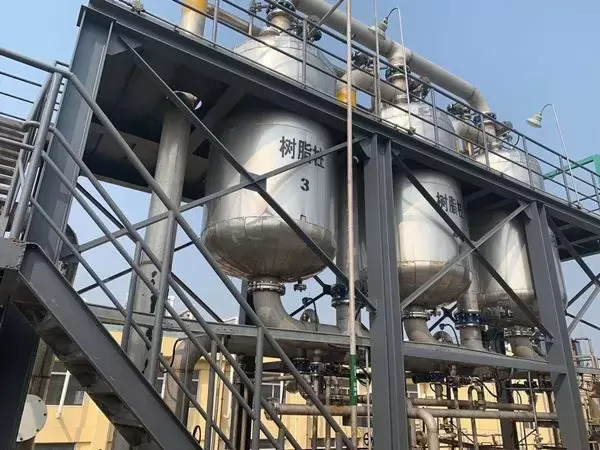
Xian, Shaanxi Sep 28, 2026 (Issuewire.com) - Water treatment providers across the globe face an intense regulatory transformation as environmental agencies institute unprecedented thresholds for per- and polyfluoroalkyl substances (PFAS). Compliance requirements demanding non-detect or single-digit parts-per-trillion (ppt) concentrations force municipal and industrial plant operators to re-examine their separation technologies. Achieving these stringent effluent goals consistently requires a structured technical evaluation long before specifying treatment equipment. Sourcing a Custom Regenerable PFAS Resin From China (https://www.seplite.com/pfas-removal/) provides water utilities with a tailored engineering pathway to overcome complex contamination challenges. However, successful media implementation begins with a meticulous diagnosis of raw water chemistry. Background water matrix components heavily govern media kinetics and overall operational lifespan. Specifically, engineers must quantify competing inorganic anions such as sulfates, nitrates, and chlorides, alongside Total Organic Carbon (TOC) levels. High concentrations of background organics occupy active sites and accelerate media exhaustion. Furthermore, comprehensive analytical profiling must map the exact PFAS speciation present in the feed water. Quantifying highly mobile short-chain compounds, including PFBA and PFBS, alongside persistent long-chain molecules like PFOA and PFOS, dictates vessel sizing and operating velocity. By assessing seasonal water quality fluctuations and discharge mandates early, utilities prevent premature media failure and establish predictable operational expenditure models. Media Customization Principles: Matching Resin Chemistry to Water Composition Selecting treatment media demands matching polymer molecular design directly to incoming water characteristics. Conventional commodity adsorbents often suffer from rapid capacity loss when handling complex water streams containing background foulants. In contrast, engineered strong base anion exchange resin (SBA) formulations utilize specialized quaternary ammonium functional groups grafted onto macroporous polymer matrices. Adjusting the hydrophobic backbone balance and controlling pore size distribution within SEPLITE® resin architectures optimizes kinetic mass transfer rates. This precise chemical customization maximizes dynamic capacity for both mobile short-chain and hydrophobic long-chain PFAS compounds under actual field conditions. Hydraulic sizing and column kinetics represent equally crucial components of system design. Facility engineers typically establish an Empty Bed Contact Time (EBCT) between 1.5 and 3 minutes when deploying high-selectivity ion exchange media. Operating at elevated linear flow rates ranging from 20 to 40 bed volumes per hour (BV/h) dramatically reduces total vessel volume requirements compared to traditional media beds. Smaller vessel footprints lower civil engineering costs, minimize plant real estate requirements, and simplify retrofits within existing treatment infrastructure. Consequently, customized media design provides a compact and hydrodynamically efficient solution for modernizing water treatment plants. The Regeneration Protocol: Step-by-Step Desorption & Waste Minimization Controlling long-term operational expenditure depends fundamentally on establishing robust regeneration protocols. Utility operators monitor column effluent to detect short-chain breakthrough, which routinely occurs ahead of long-chain saturation. Establishing strict operational bed volume limits ensures timely elution before regulatory discharge thresholds are exceeded. Deploying advanced ion exchange technology (https://www.seplite.com/advanced-ion-exchange-technology-for-efficient-short-chain-pfas-removal/) enables rapid chemical desorption of bound contaminants using optimized salt and solvent eluent formulations. This specialized chemical stripping process completely restores active exchange sites without causing physical degradation to the underlying matrix. Minimizing secondary waste volume remains a paramount objective during regeneration system design. Modern automated regeneration plants incorporate closed-loop solvent recovery modules that execute efficient eluent distillation. These systems recover up to 95 percent or more of spent regeneration solvents for immediate reuse in subsequent elution cycles. As a result, the recovery process concentrates extracted PFAS molecules into an extremely small liquid waste stream. This dramatic volume reduction significantly decreases downstream hazardous waste destruction expenses, offering utility owners an environmentally responsible and financially sustainable remediation cycle. Long-Term O&M Best Practices: Preserving Physical and Chemical Bead Integrity Maintaining consistent treatment performance over multiple operational cycles requires strict adherence to physical and chemical maintenance protocols. The mechanical durability of ion exchange media determines its resistance to physical attrition and hydraulic compaction. High-quality synthetic resins maintain a whole-bead count of 93 percent or higher, effectively preventing bead breakdown during high-velocity liquid flow. Additionally, chemical regeneration introduces rapid osmotic pressure shifts across the polymer structure. Specifying resilient crosslinked bead matrices protects against physical fracturing during alternating treatment and desorption cycles. Preventative operational measures also guard media beds against external fouling mechanisms. Incoming raw water frequently contains suspended solids, dissolved iron, manganese, or biological matter that block active resin pores. Installing adequate pre-filtration systems, such as multimedia filters or microfiltration units, shields the resin bed from physical clogging. Furthermore, implementing routine clean-in-place (CIP) wash regimens removes accumulated organic foulants and restores optimal mass transfer kinetics. These operational safeguards ensure that the resin bed retains its baseline exchange capacity across years of continuous operation. Risk Mitigation in Procurement: Sunresin's Turnkey EPC & Quality Assurance Framework Transitioning from initial feasibility studies to full commercial deployment involves significant technical and financial considerations. Utility directors reduce project execution risks by partnering with fully integrated technology providers capable of delivering complete systems. Mobile skid-mounted pilot plants allow operating teams to validate custom resin formulations under actual site conditions before committing major capital expenditure. As a global leader in separation technologies, Sunresin (Sunresin New Materials Co. Ltd.) (https://www.seplite.com/sunresin-profile/) operates advanced manufacturing facilities with an annual resin production capacity exceeding 50,000 cubic meters. Sunresin enforces rigorous quality management standards across all synthesis facilities, backed by international ISO certifications and a dedicated team of over 300 technical R&D specialists. Beyond media synthesis, Sunresin New Materials Co. Ltd. provides complete Engineering, Procurement, and Construction (EPC) services. Specialized engineering teams design custom modular skids, continuous ion exchange systems, and fully automated solvent distillation units. By managing the entire value chain--from initial polymer synthesis to final plant commissioning--Sunresin offers utility clients single-source accountability and verified system performance. Practical Implementation Roadmap for Utility Engineers Upgrading water treatment infrastructure to satisfy stringent PFAS mandates requires a structured execution roadmap. Utility engineers should begin by conducting comprehensive water analysis, capturing seasonal variations in organic loading and background inorganic ions. Following water characterization, engineering teams collaborate with technology specialists to perform bench-scale column testing and generate detailed breakthrough curves. Deploying pilot skids on site further confirms target effluent levels and optimizes operational regeneration parameters. Once pilot validation concludes, project managers proceed with detailed mechanical design, vessel footprint optimization, and facility integration. Utilizing modular equipment skids accelerates construction schedules and minimizes plant downtime during system retrofits. Facility operators seeking custom media formulations, pilot skid testing, or complete turnkey EPC consultation can initiate technical evaluations by visiting https://www.seplite.com/.

Source :Sunresin New Materials Co. Ltd.
This article was originally published by IssueWire. Read the original article here.
More News

Meghan Markle sparks divorce rumours as she ditches engagement ring
Meghan Markle sparks divorce rumours as she ditches engagement ringMeghan Markle has ignited fresh divorce rumors as she was not wearing her engagement ring during her first public appearance with Prince Harry in the UK following their return from California.For those unaware, the Duke and Duchess...

15 Spooky Secrets About the Halloweentown Franchise Revealed
As a wise woman once said, "Being normal is vastly overrated." That, and the fact that, yes, Oct. 31 is quite cool were the main takeaways when Halloweentown debuted on the Disney Channel on Oct....

King Charles warned about his reconciliation plans for Prince William, Harry
The kindest thing King Charles and his courtiers could do is make no attempt at a reunion and simply make sure the door is left open.King Charles has been issued a warning over his plans for his warring sons Prince William and Harry’s reconciliation.There are claims, the King wants to...

Coen Brothers Bring Laughs to Lumière Award Ceremony as Javier Bardem Recalls ‘No Country for Old Men’: ‘They Gave Me One Masterpiece’
To the sound of the Gipsy Kings’ Spanish-language rendition of “Hotel California,” Joel and Ethan Coen took the stage at Lyon’s Lumière Film Festival on Friday evening to receive the Lumière Award, celebrating four decades of filmmaking with a characteristically irreverent tribute to the inventors of cinema. “Thank you to the Lumières for inventing the […]

Miranda Lambert gushes over Ella Langley as 'Choosin' Texas' marks a year of success
Miranda Lambert gushes over Ella Langley as ‘Choosin’ Texas’ marks a year of successMiranda Lambert just admitted that she loves to perform Ella Langley’s smash hit Choosin’ Texas for fans.In a recent interview for The New York Times' Popcast podcast, the country...

Lana Del Rey’s Country Duet and 9 More Songs We're Talking About
The singer joins Zach Bryan’s new single, Olivia Rodrigo teams up with Chappell Roan, Fireboy DML vows longevity and more.

Two Nights at Saint Vitus, the Metal Mecca of Brooklyn
Over two nights at Saint Vitus, the newly reopened venue, generations of metalheads made their pilgrimage.

Banter and Booze at the Best Book Parties of the Year
Each October, the international publishing business descends on Frankfurt, Germany, for days of dealing and long nights of partying.

J.K. Rowling’s Agent Neil Blair Condemns Trans Rights Protest At ‘Harry Potter And The Cursed Child’
EXCLUSIVE: J.K. Rowling’s agent Neil Blair has claimed that a trans rights protest at the gala performance of Harry Potter and the Cursed Child put people at risk. During an event celebrating a shortened version of the West End stage show at the Palace Theatre on Thursday night, a number of protesters stormed the red […]

'Hilarious': Meghan Markle, Prince Harry receive massive support from anti-monarchy group
Readers believe Meghan and Harry should not be allowed to undertake these kinds of engagements.The Anti-monarchy group Republic has extended support to Meghan Markle and Prince Harry amid calls they 'should not be allowed to carry out faux royal tours.'According to the Mirror, the outlet conducted...

Jennie gets candid about being 'honest' through music: 'I learned so much'
Jennie gets candid about being ‘honest’ through music: ‘I learned so much’Jennie just detailed her journey as a solo artist and how it led to self-discovery and put a hold on "overthinking everything."The 30-year-old star rose to prominence as a member of the South...

Harry Styles debuts new track in memory of late Liam Payne
Harry Styles debuts new track in memory of late Liam PayneHarry Styles paid an emotional tribute to Liam Payne with a new song, two years after his death.Liam died on October 16, 2024, after falling from a balcony at his hotel in Buenos Aires, Argentina and exactly two years to the day of his...
Recommended









YOUR NEWS, OUR NETWORK.
Do you have Great News you want to tell the world?
Be it updates about your business or your community, you can make sure that it’s heard by submitting your story to our network reaching hundreds of news sites across 6 verticals.